
Why You Need to Fast Before a DEXA & RMR Test
If you’ve booked a DEXA or RMR scan with us, you’ll know we ask you to come in fasted – ideally first thing in the morning, before breakfast and before your morning coffee.
It can seem like a small detail, but it’s makes a difference towards the accuracy of your results. More importantly, it determines whether your numbers can be fairly compared from one scan to the next.
Here’s why what you eat and drink beforehand matters for both tests.
Food and Fluid Count as Lean Mass on a DEXA Scan
A DEXA scan splits your body into three compartments: fat mass, bone mineral, and lean soft tissue.
That third compartment – “lean mass” – isn’t just muscle. It’s everything that isn’t fat or bone, including organs, skin, body water, and whatever happens to be sitting in your stomach, intestines and bladder at the time of the scan.
So if you’ve just had breakfast and a big bottle of water, the scanner has no way of knowing that the extra weight in your trunk is food and fluid. It gets counted as lean mass.
One study found that eating – regardless of whether the meals were higher in carbohydrate, fat or protein – increased DEXA estimates of total lean mass by up to 1.7% on average, with some individuals seeing increases of more than 4.5%. Estimated fat mass dropped slightly at the same time. Everything returned to baseline after an overnight fast.
That might not sound like much, but for someone hoping to see a 1kg gain in muscle over a few months, the “noise” from a meal can be about the same size as the change you’re trying to measure.
The same goes for fluid. Sipping some water is fine, but drinking large volumes right before your scan adds mass that will show up as lean tissue rather than any real change in your body.
Carbohydrates, Glycogen and Water
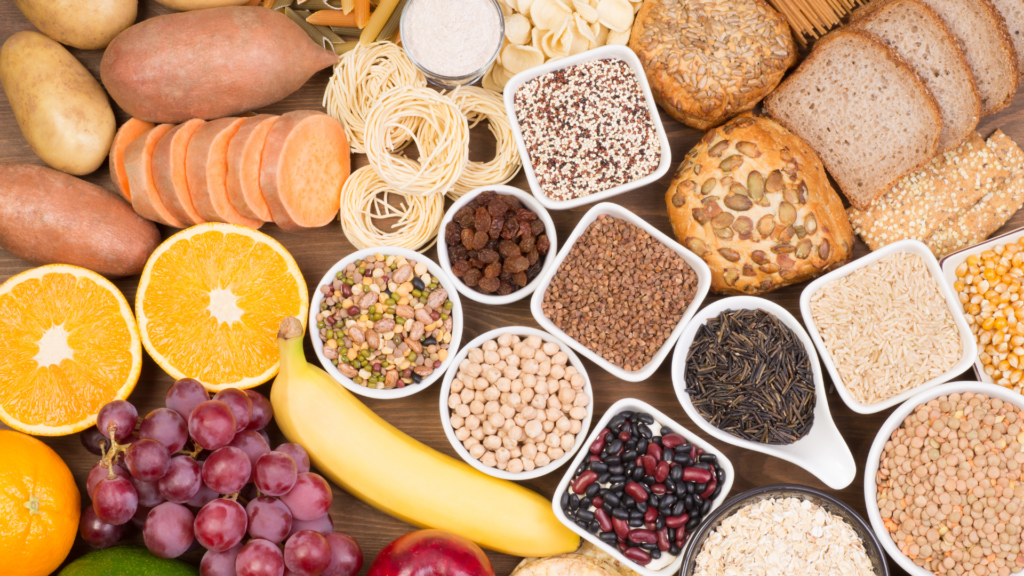
It isn’t only what you eat on the morning of your scan – what you’ve eaten over the previous few days can matter slightly too.
Your muscles store carbohydrate as glycogen, and glycogen doesn’t sit there on its own. Research using muscle biopsies supports the long-held estimate that each gram of glycogen is stored with at least 3g of water.
So when your carbohydrate intake goes up, your muscles hold more glycogen and more water – and because DEXA counts water as lean tissue, your lean mass reading goes up with it. When carbohydrate intake drops (for example on a low-carb diet or during an aggressive cut), the reverse happens.
A study in athletes showed this directly: glycogen loading increased DEXA estimates of lean mass by around 2–3%, over a period where little to no actual change in muscle protein was likely.
Dailyvariations in carbohydrate intake usually have a small effect, but it’s worth keeping your eating and training broadly similar in the day or two before each scan.
Why maintenance phases make for the best comparisons
This is also why the timing of your scans within a training or diet cycle matters.
If your first scan is taken at the end of a high-carb bulking phase and your second at the end of a lower-carb cut, some of the “lean mass lost” will simply be glycogen and water, not muscle.
Where possible, aim to have your scans done during maintenance phases – or at least at the same point in your cycle each time. That way, glycogen and hydration are more comparable, and any change in lean mass is more likely to reflect a real change in muscle.
Food Intake and Resting Metabolic Rate
Fasting matters just as much for RMR testing, but for a different reason.
Our RMR test uses indirect calorimetry. While you rest quietly and breathe normally, the device measures how much oxygen you consume and how much carbon dioxide you produce. That gas exchange is then converted into the number of calories your body burns at rest.
The catch is that digesting food takes energy. After a meal, your body works to break down, absorb and store what you’ve eaten – known as the thermic effect of food (or diet-induced thermogenesis). That extra work shows up in your breathing, and the calorimeter picks it up.
A review on diet-induced thermogenesis estimates it accounts for roughly 5–15% of daily energy expenditure on a mixed diet. It’s highest for protein and lowest for fat.
If you’ve eaten before your test, we’re no longer measuring your resting metabolism – we’re measuring your resting metabolism plus digestion. Your RMR would read higher than it really is, and any calorie targets built from it would be set too high.
This is why best-practice guidelines for measuring RMR recommend controlling food intake before testing, as its effect on metabolic rate can last for several hours after eating.
Caffeine Intake and Resting Metabolic Rate
Caffeine is a stimulant, and it increases energy expenditure in a dose-dependent way – the more you have, the bigger the effect. It can also raise heart rate and leave you feeling more alert and less settled, which makes it harder to reach a true resting state.
In one study using the same indirect calorimetry method, 200mg of caffeine raised participants’ metabolic rate by an average of about 7%, and it stayed elevated for the full three hours it was measured.
On an RMR of 1,800 calories, a 7% increase would add roughly 125 calories – enough to noticeably skew a nutrition plan built around that number.
This applies to coffee, tea, energy drinks, pre-workouts and caffeine tablets. Updated best-practice guidelines note that caffeine’s effect on metabolic rate lasts longer than four hours, so the simplest approach is to skip it until after your test.
How to Prepare for Best Results
- Come in fasted – book a morning appointment and skip breakfast until after your scan.
- Small sips of water only – avoid drinking large volumes beforehand.
- No caffeine – hold off on coffee, tea, energy drinks and pre-workout until after your test.
- Keep the days before consistent – eat and train similarly in the day or two before each scan, and avoid strenuous exercise in the 12 hours prior.
- Empty your bladder right before your scan.
- Scan at the same point in your cycle – ideally during a maintenance phase – so your results compare like with like.
For the full checklist, see our guide on how to prepare for a DEXA scan.