
Key Fat Mass Numbers Worth Knowing For Health
Your DEXA scan gives you far more than a body fat percentage – here’s how to read the numbers that actually matter.
Most people know their weight. Far fewer know their visceral fat area, fat mass index, or how their body fat percentage compares to their age group. Yet these are the numbers that research links most directly to long-term health and longevity – and a DEXA scan measures all of them precisely.
Body Fat Percentage
Body fat percentage is the proportion of your total body weight that comes from fat. It’s the most commonly discussed body composition metric – but understanding what a healthy range looks like for your sex and age matters more than the number alone.
The Healthy Range
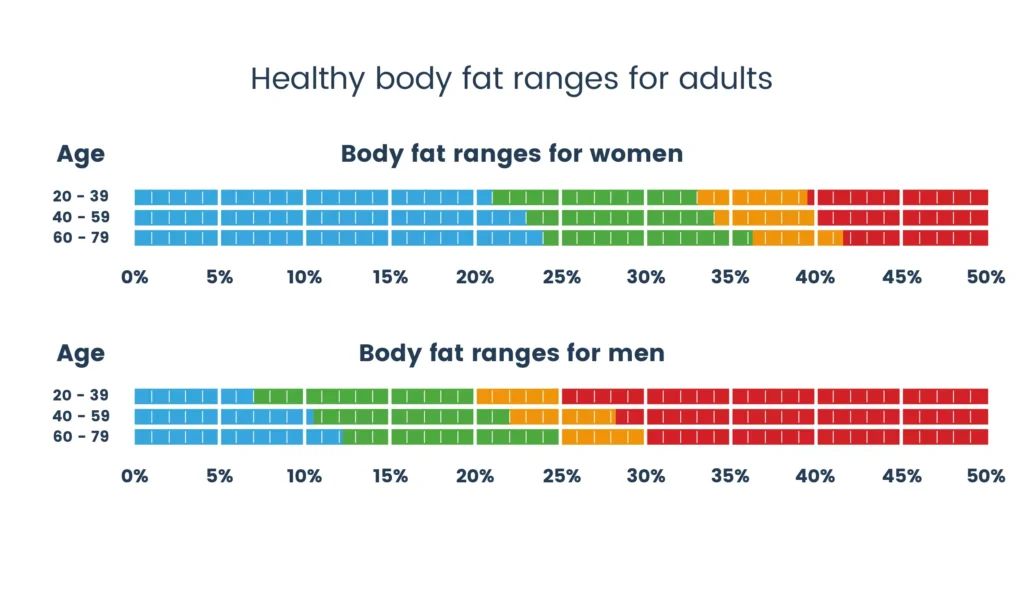
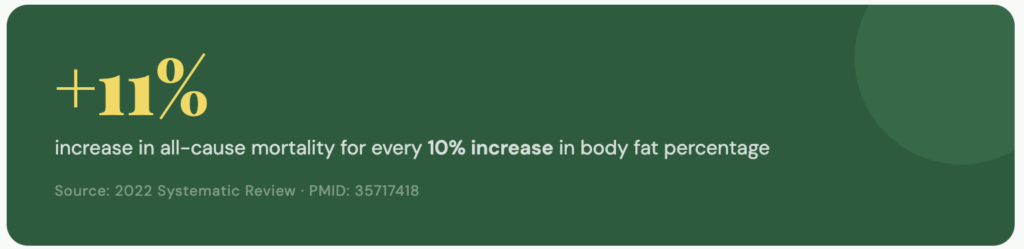
It’s also worth noting that body fat percentage is relative to lean mass. Even if your actual fat stays constant, losing or gaining muscle will shift this number. This is why some people feel and perform optimally at different points within the healthy range – the goal isn’t a single target, but understanding what the number means for you.
Fat Mass Index (kg/m²)
Fat Mass Index (FMI) is a more nuanced measure than body fat percentage alone. It adjusts your total fat mass for your height – similar in concept to BMI, but applied specifically to fat rather than total body weight. This makes it a more accurate reflection of fat-related health risk across different body frames.
The Healthy Range
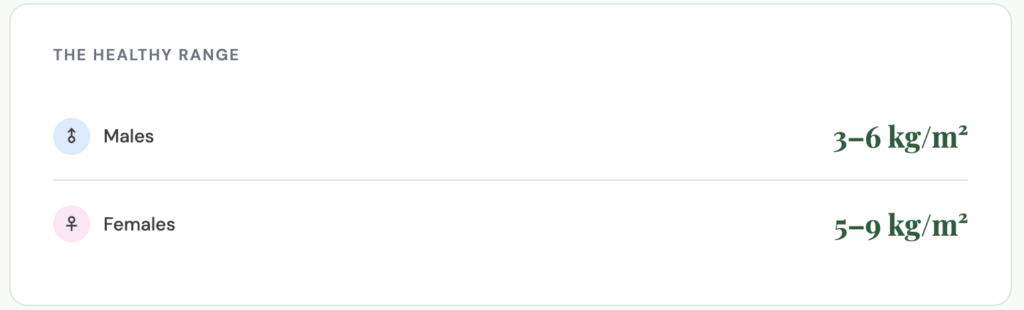
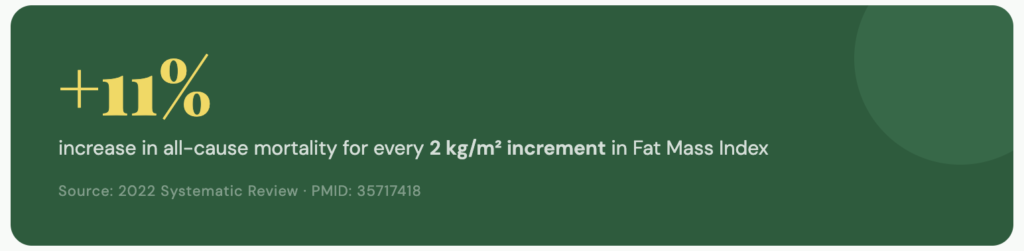
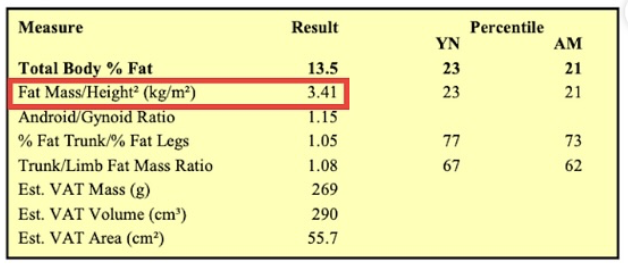
You’ll find your FMI listed as Fat Mass/Height² in your DEXA scan results alongside its age- and sex-matched percentile – giving you meaningful context for where your result sits relative to your peers.
Visceral Fat
Visceral fat is the fat that accumulates around your internal organs – the liver, pancreas, intestines, and heart. Unlike subcutaneous fat (the fat you can pinch under the skin), visceral fat is metabolically active and directly linked to elevated risk of type 2 diabetes, cardiovascular disease, and certain cancers.

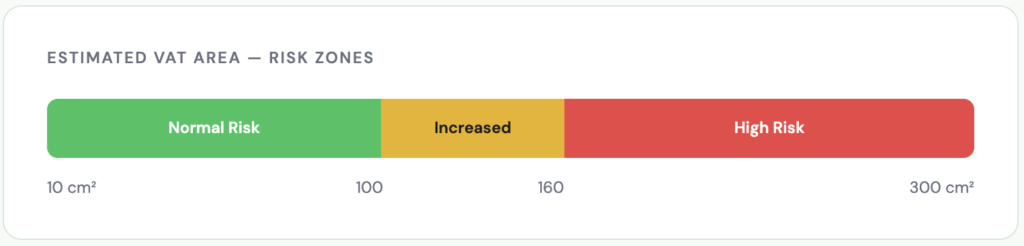
On your DEXA report, the most useful visceral fat measure is the Estimated VAT Area (cm²), as it accounts for height and gives the most accurate reflection of risk. Here’s how to interpret it:
Estimated VAT Area – Risk Zones
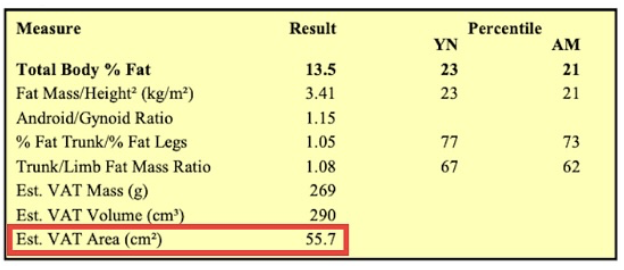
DEXA is uniquely suited to measuring visceral fat. While other body composition tools can only estimate it indirectly, DEXA can precisely quantify visceral fat volume, mass, and area.
Why These Numbers Matter
- Body fat percentage tells you the proportion of fat relative to your total weight – but it’s just the starting point.
- Fat Mass Index adjusts for height, giving a more accurate picture of fat-related risk across body types.
- Visceral fat is the most dangerous fat type and one of the strongest predictors of chronic disease and mortality.
- DEXA is the gold standard – it can precisely differentiate between fat types and their locations, unlike scales or bioelectrical impedance tools.
- Tracking these numbers over time helps you make more targeted, evidence-based lifestyle and medical decisions.
Since the type and location of fat play a major role in long-term health outcomes, knowing your numbers – not just your weight – gives you a more complete and actionable picture of your health.